
Maisonettes with Pool for Sale in Malta
35 results found













Not finding it?
Tell us your dates and what you need. We reply on WhatsApp.
Market Insights
Malta, there are currently 34 properties for sale. The typical asking price is €425,000, with homes ranging between €0–€3,200,000. Around 22% of listings include Terrace, and most have 3 bedrooms. Updated 10/3/2026.
Buying property in MaltaProperty for sale in Malta: complete buyer's guide
From AIP permits to stamp duty bands, notary searches, and the residency programmes that pair with property ownership, this guide walks foreign and local buyers through the rules and costs of a Maltese purchase.
34 active sale listings across Malta, median asking price €425,000.
Property for sale in Malta: complete buyer's guide
From AIP permits to stamp duty bands, notary searches, and the residency programmes that pair with property ownership, this guide walks foreign and local buyers through the rules and costs of a Maltese purchase.
34 active sale listings across Malta, median asking price €425,000.
Malta is one of Europe's most accessible property markets for international buyers. EU citizenship rights, English as an official language, and a tax framework built around residency programmes combine with a Mediterranean climate and a small but liquid market. Whether you are buying a Sliema apartment as a buy-to-let, a Gozo farmhouse as a holiday home, or your first home in Birkirkara, the legal process is the same: a notary, a binding konvenju (promise of sale), and a final deed before the Public Registry. This guide walks through the eight steps from offer to keys, the closing costs that sit on top of the asking price, the AIP rules that govern non-EU purchases, the tax landscape, eight headline localities, and the mortgage market that funds most local transactions.
The 8-step buying process in Malta
Maltese law requires every property transaction to pass through a notary, a binding promise of sale, and a formal final deed. From accepted offer to keys, the timeline typically runs 8 to 12 weeks for a resident purchase and 14 to 20 weeks when an AIP permit is required.
- 1
Make an offer
Submit a written offer to the seller, typically through the listing agent. Maltese offers are not binding until the konvenju is signed, but you can pay a small reservation deposit (usually 1,000 to 2,500 EUR) to take the listing off the market for two to four weeks while the legal paperwork is prepared.
- 2
Engage a notary
Each side appoints a notary, but the buyer's notary leads the transaction in Maltese practice. The notary drafts the konvenju, runs the title and hypothec searches, prepares the AIP application if needed, and presides over the final deed. Notaries are state-licensed and bound by professional secrecy.
- 3
Sign the konvenju (promise of sale)
The konvenju is a binding contract that locks the price, deposit, and conditions. The buyer pays a 10 percent deposit (held in escrow with the notary) plus 20 percent of the stamp duty due. The konvenju typically gives 3 to 6 months to complete the deed, conditional on a clean title search and any AIP approval.
- 4
Apply for an AIP permit if required
Non-EU buyers outside an SDA apply through the Capital Transfer Duty Department. Processing takes 6 to 10 weeks. The application requires identification, the konvenju, source-of-funds evidence, and the €232 permit fee. EU citizens buying a primary residence skip this step entirely.
- 5
Notary searches
Searches confirm the seller has clean title, that no hypothecs (mortgages) or privileges sit on the property, that planning permits cover the existing structure, and that ground rent or perpetual emphyteusis is up to date. Searches typically run two to four weeks and cost 500 to 1,500 EUR.
- 6
Pay the balance of stamp duty and arrange financing
If a Maltese mortgage is needed, the lender's valuation and bank-side legal review run in parallel with the searches. The remaining 80 percent of the stamp duty is settled at the deed. The buyer's notary calculates the exact amount based on zone and buyer category.
- 7
Sign the final deed
All parties meet at the notary's office, the buyer pays the balance of the price, the seller hands over keys, and the deed is signed. The notary publishes the deed and pays stamp duty to the Inland Revenue. Title transfers immediately on signature.
- 8
Register and take possession
The notary lodges the deed with the Public Registry within 15 working days. Utility accounts (electricity, water, internet) transfer to the new owner; condominium fees, if any, start from the deed date. The Public Registry record becomes the legal proof of ownership.
Closing costs that sit on top of the asking price
At the standard stamp duty rate, Maltese closing costs typically add about 6 to 7 percent to the price, less with a first-time buyer, owner-occupier or UCA relief, and a little more when an AIP permit is required. The largest single line is stamp duty, paid in two parts (20 percent at the konvenju, the balance at the final deed). Below is the full breakdown.
- Stamp duty
- First-time buyers are exempt on the first €200,000; other buyers of their only home pay the reduced rate on the first 200,000 EUR. Buyers replacing their home can reclaim the duty on the first 86,000 EUR of the new one (up to 3,010 EUR, purchases until 31 December 2026). Property in a UCA, or built 20+ years ago and vacant 7+ years, is exempt on the first 750,000 EUR until 31 December 2026. None of these reliefs applies to buyers who need an AIP permit.
- Notarial fees
- Set by law (Cap. 55 tariff): 1% on the first 11,694 EUR, 0.5% up to 596,394 EUR, 0.25% above, plus 18% VAT. A loan deed is charged at two-thirds of the scale. Covers the konvenju, the deed and its registration.
- Notary searches
- Title and hypothec searches at the Public Registry, planning and ground rent searches, and disbursements. An estimate: no schedule is published. The Public Registry fee itself is set by law (about 300 EUR on 300,000 EUR).
- AIP permit (if applicable)
- Required for non-EU buyers outside an SDA. Minimum government floor prices: €300,619 for a house, €174,274 for an apartment. The permit takes 6 to 10 weeks, runs in parallel with searches, and binds the property to personal-use only (no rental).
- Agency commission
- Plus 18 percent VAT on commission. Buyers do not pay agency commission in Malta. Some agents charge a fixed buyer-side advisory fee (typically 500 to 1,500 EUR) for buyer-representation work, but this is optional and not market-standard.
Use the stamp duty calculator or the AIP calculator to model the closing-cost picture for your specific purchase.
Foreign buyers: AIP, SDA, and EU vs non-EU
Malta's foreign-buyer rules sit on top of EU treaty rights and the domestic Acquisition of Immovable Property by Non-Residents Act. The framework groups buyers into three tiers depending on citizenship and Maltese residence history.
EU and EEA citizens
EU and EEA citizens can buy a primary residence anywhere in Malta with no permit, no minimum price, and no restrictions. A second residence (holiday home or buy-to-let) requires an AIP permit, unless the buyer has been ordinarily resident in Malta for five continuous years, after which they are treated as a Maltese citizen for property purposes.
Non-EU buyers
Non-EU buyers need an AIP permit for any property outside an SDA. The minimum government floor price is €300,619 for a house and €174,274 for an apartment, indexed annually. The permit fee is €232, processing 6 to 10 weeks. The property is for personal residential use only and cannot be rented out, sold within five years without permission, or used as a holiday let. British buyers post-Brexit fall into this tier.
Special Designated Areas
Inside an SDA the AIP regime is suspended entirely. Non-EU buyers can purchase as freely as Maltese citizens, with no permit, no floor price, no use restrictions, and no limit on the number of properties owned. Tigné Point, Portomaso, Pendergardens, Fort Cambridge, Mercury Tower, and Smart City are Malta's largest and most active SDAs. SDA stock typically commands a 15 to 25 percent price premium over comparable non-SDA stock for this reason.
Tax landscape: capital gains, rental income, residency
Capital gains and property transfers tax
Sellers pay an 8 percent Property Transfers Tax on the sale price (not on the gain), withheld by the notary at the deed. Reduced rates of 5 percent apply to property held under five years and 7 percent to pre-2004 properties held under three years. A primary residence held for at least three years is exempt. Capital gains on inherited property are calculated against probate value, not the original purchase price.
Rental income tax
Long-let rental income (over six months) is taxable at a flat 15 percent withholding rate as an alternative to the standard income tax bands, declared by the landlord on the year's tax return. Short-let income (Airbnb, Booking, sub-six-month) is taxed at the standard progressive rate (up to 35 percent). Both regimes require the rental contract to be registered with the Housing Authority within 10 days of signing, and short-lets additionally require an MTA tourism licence.
Residency programmes
Malta offers several routes that combine property purchase or lease with tax residency for foreign buyers:
Each programme has its own qualifying property thresholds, contribution requirements, and minimum stay obligations. The right choice depends on citizenship, source of income, and primary tax residence.
Where to buy: eight Malta localities at a glance
Malta's character changes neighbourhood by neighbourhood. The eight localities below cover the highest-demand bands, from premium harbour-front through value-focused inland towns and the slower pace of Gozo. Each links through to the active sale listings on Darscover.
Sliema
Premium urban hub on the Marsamxett harbour, dense high-rise apartments and full retail. Popular with expats, buy-to-let investors, and short-let operators. Median apartment asking 500,000 to 850,000 EUR. Two SDAs (Tigné Point and Fort Cambridge) sit inside the locality.
St Julian's
Entertainment district anchored by Spinola Bay and Paceville, with luxury developments such as Portomaso, Mercury Towers, and Pendergardens. Strong rental yields. Median apartment 550,000 to 950,000 EUR; Portomaso penthouses regularly clear 2 million EUR.
Valletta
Capital city, UNESCO World Heritage Site, stone-built apartments and townhouses inside Renaissance bastions. Limited supply due to the small footprint. Median 450,000 to 800,000 EUR for restored stock. Most of the city is an Urban Conservation Area, where the first 750,000 EUR is exempt from stamp duty until 31 December 2026.
Mellieha
Northern resort town with sea views over Comino and Gozo, gateway to the largest sandy beach (Ghadira Bay). Mix of villas, traditional houses, and tourist apartments. Median 350,000 to 600,000 EUR. Strong holiday-let demand.
Mosta
Central market town anchored by the Rotunda dome, mid-market apartments and family houses. Excellent value for primary buyers and centrally located. Median 280,000 to 450,000 EUR for a 3-bedroom apartment.
Birkirkara
Largest Maltese town by population, deep stock of mid-market apartments and townhouses across Birkirkara, Fleur-de-Lys, and Swatar. Strong value for first-time buyers. Median 230,000 to 380,000 EUR. First-time buyers pay no duty on the first 200,000 EUR, so the duty in this band stays low.
Victoria (Gozo)
Gozo's capital, slower pace with a Citadel core and 17th century houses of character. Median 220,000 to 400,000 EUR. Popular with retirees and second-home buyers seeking distance from urban Malta.
Marsaskala
Eastern coastal town with a working harbour and a more residential character than Sliema. Sea-front apartments and modern developments. Median 250,000 to 420,000 EUR. Improving infrastructure (new promenade, cycle paths) is lifting prices.
Maltese mortgages: a primer
Maltese lenders lend to residents, EU citizens with proof of income, and non-residents on tighter terms. Every lender must apply the Central Bank of Malta's borrower-based limits, summarised below; this guide names no lender.
Loan-to-value norms
Central Bank limits: up to 90 percent loan-to-value and 40 years (or retirement age) for first-time buyers and buyers of a primary residence with no outstanding home loan; up to 75 percent and 25 years for everyone else, including second homes and buy-to-let. Repayments at a stressed rate may not exceed 40 percent of net income. Properties under 175,000 EUR are outside these limits. Non-residents are commonly asked for about 30 percent deposit, which is market practice, not a rule.
Interest rates
Most Maltese home loans are variable: a reference rate plus a margin. The published market average for new home loans (variable or fixed for up to one year) was about 2.5 percent in August 2026. Fixed-rate periods are also offered. Compare the rate, margin and fees of every offer you receive.
Common pitfalls
Banks require life cover written in their favour (recurring annual premium, typically 0.2 to 0.4 percent of the loan), and home insurance assigned to the bank. Foreign income is discounted at 70 to 80 percent for affordability calculations. Currency-mismatch loans (EUR mortgage on GBP or USD income) can be refused outright by some lenders, accepted with a higher LTV haircut by others. Self-employed applicants need three years of audited accounts; salaried applicants need three months of payslips.
Use the mortgage calculator to model monthly repayments at different rates, deposit sizes, and terms before you approach a bank.
Get help with finance
Answer five quick questions and get a call about financing this purchase.
Frequently asked questions
Do foreign buyers need a permit to buy property in Malta?
Non-EU citizens need an Acquisition of Immovable Property (AIP) permit unless they buy inside a Special Designated Area. The permit fee is €232 and the property must meet a minimum price threshold (currently €300,619 for a house and €174,274 for an apartment). EU citizens, and any non-Maltese resident who has lived in Malta for at least five years, do not need a permit for a primary residence. A key restriction: property acquired under an AIP permit is for personal use only and cannot be rented out.
How much is stamp duty when buying property in Malta?
The standard residential rate is 5.0% of the higher of the price and the market value, paid in two instalments (20% at the konvenju, the balance at the final deed). First-time buyers pay nothing on the first €200,000. Other buyers of their only home pay 3.5% on the first 200,000 euro. Property in an Urban Conservation Area, or built 20+ years ago and vacant 7+ years, is exempt on the first €750,000 until 31 December 2026. Gozo's reduced rate expired in January 2024, and none of these reliefs applies to buyers who need an AIP permit.
What is a Special Designated Area in Malta?
SDAs are designated zones, typically modern gated developments, where the AIP regime does not apply. Non-EU buyers can purchase as freely as Maltese citizens, with no permit and no minimum price. There is also no limit on the number of properties owned within SDAs. Tigné Point, Fort Cambridge, Portomaso, Pendergardens, Mercury Tower, and Smart City are the highest-profile SDAs.
What costs sit on top of the property price in Malta?
Buyers should budget for stamp duty (the rate depends on the buyer and any relief), the notary's fee set by law (about 0.5% of the price plus VAT), searches and disbursements of around 500 to 1,500 euro, the Public Registry fee, and an AIP permit fee where applicable. Agency commission in Malta is paid by the seller, not the buyer.
Can foreigners get a Maltese mortgage?
Yes. The Central Bank sets no separate limit for non-residents, but lenders commonly ask them for about 30% deposit (market practice), proof of income in a stable currency, and life cover. The Central Bank caps loans at 90% of the value for a first or primary home and 75% otherwise. Use the Darscover mortgage calculator to model monthly repayments before approaching a lender.
Browse all sale listings on Darscover
Across Malta and Gozo
Malta and Gozo offer a diverse selection of properties ranging from modern apartments and penthouses to traditional townhouses and countryside farmhouses. The main island of Malta provides bustling urban centers like Sliema, St. Julian's, and Valletta, while Gozo presents a more tranquil lifestyle with rural homes, villas, and scenic views. Buyers and renters can explore properties with features like sea views, outdoor space, garages, and air conditioning. Whether you prefer a vibrant city atmosphere or a peaceful retreat, both islands provide options to suit different lifestyles and budgets. Central locations offer easy access to amenities, schools, and transport, while coastal and rural areas appeal to those seeking privacy and nature. Filters such as furnished, pet-friendly, or newly built homes are commonly used. Property seekers benefit from the islands' Mediterranean climate, cultural heritage, and year-round livability, making Malta and Gozo attractive for both residence and investment.
Property For Sale
Explore a wide range of residential and commercial properties currently available for sale. This includes apartments, penthouses, terraced houses, maisonettes, villas, and farmhouses across Malta and Gozo. Buyers can filter properties by location, price, number of bedrooms, outdoor space, garage availability, and other amenities such as air conditioning or sea views. Listings span both urban and rural areas, offering options for first-time buyers, families, investors, and those seeking holiday or retirement homes. Whether you're looking for a modern apartment in a city center or a quiet villa in the countryside, the property for sale section includes regularly updated listings to match various budgets and preferences. Search by town, lifestyle, or key features to find the right fit.
Spacious Maisonettes
Maisonettes are two-story residential units that offer the space and privacy of a house within an apartment building. These properties typically feature a ground floor with living areas and an upper floor with bedrooms, providing excellent separation of living and sleeping spaces. Maisonettes are popular among families and those seeking more space than a traditional apartment. They often include private entrances, outdoor areas, and modern amenities. Found throughout Malta and Gozo, maisonettes offer a practical alternative to detached houses while providing more space and privacy than standard apartments.
Private Pool Access
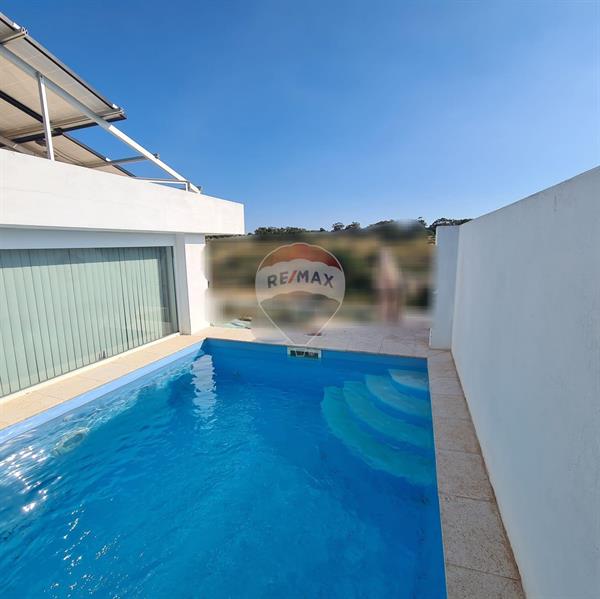
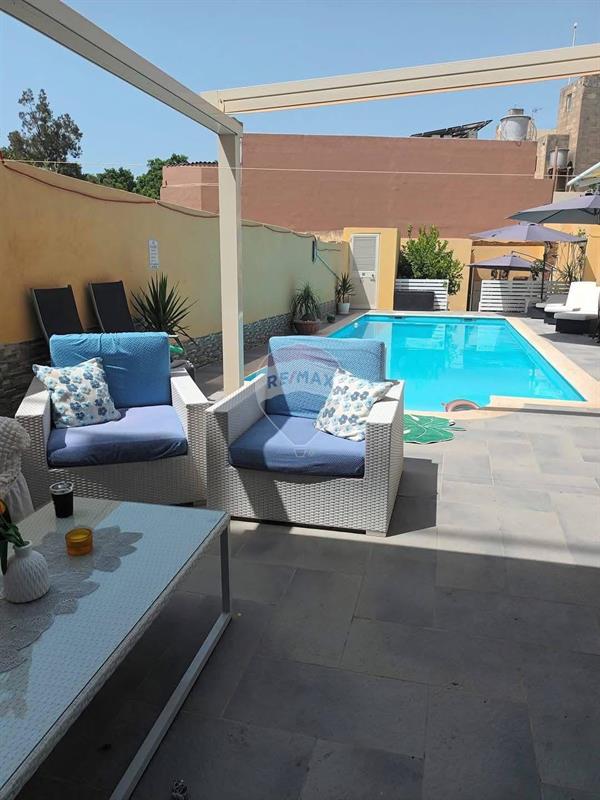
Properties with access to a private or shared swimming pool are highly desirable in Malta's warm Mediterranean climate. These homes offer the ideal setting for relaxation, entertainment, and outdoor living, whether in a residential complex or a standalone villa. Pool-equipped properties are common in luxury developments, seaside resorts, and countryside retreats. Buyers and renters can filter listings to find apartments with communal pools, villas with private pools, or farmhouses with landscaped outdoor areas. This amenity enhances lifestyle value and is particularly attractive for holiday rentals, long-term living, or investment. Pool properties often include other features like sun terraces, BBQ areas, and outdoor showers, making them perfect for enjoying warm seasons year-round.
Free tools
Run the numbers before you buy
Free tools